
The unbelievable survival of the SNP (2026 Holyrood elections)
- Lucy Lydekker
- Apr 23
- 6 min read

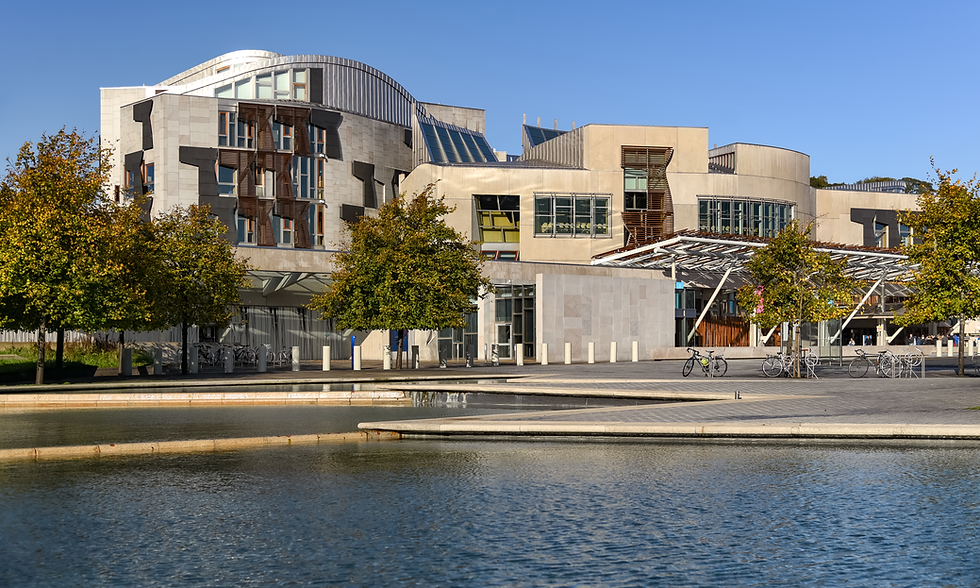
(LONDON, UNITED KINGDOM) — The latest YouGov MRP model is suggesting that the Scottish National Party (SNP) could win an overall majority in the upcoming May 2026 parliamentary elections in Scotland. This is a historic turnaround for a party which seemed to have collapsed after a hefty defeat at the 2024 general election and scandals in 2023, an unbelievable survival of the SNP.
Holyrood elections explained
When the Scottish parliament was established in the late 1990s by Tony Blair's New Labour, they implemented an electoral system that should've made it impossible for any one party to achieve a majority: mixed-member proportional. It mixes smaller plurality constituencies using FPTP (first-past-the-post) as seen in Westminster elections but with an additional 56 seats across several regions allocated to parties allocated proportionally, in order to supplement smaller parties who fail to win as many constituencies as they are entitled to per popular support. It is difficult to achieve majorities in proportional and even semi-proportional systems, because it requires nearly half the voting population to agree on a single party which can become very difficult, just ask the Netherlands.
Nevertheless political juggernaut Alex Salmond, who had become First Minister of Scotland in the previous 2007 election with a minority, led the SNP to an outright majority at the 2011 election with 69 seats out of 129, a majority of 8. This remarkable result, with the SNP on ~45% of the popular vote, was enough to twist the arms of prime minister David Cameron to grant the SNP what had been their key policy since inception: an independence referendum.
The 2014 independence referendum was lost for the SNP by a 10 point margin (45% to 55%) which had the potential to wipe out any notional of independence for generations, as was argued by the stay campaign of the time. However the same David Cameron held another referendum in 2016, this time on leaving the European Union, which succeeded— a key part of the Scottish independence campaign was that Scotland would lose all of the great benefits of being in the EU if it were to leave, benefits that they lost regardless in 2020 when the UK officially withdrew from the bloc. Cameron, by granting a referendum after an outright majority, accidentally set the precedent that this would be the necessary mandate for attaining new referendums.
The plague surrounding the SNP
Here is a quick background on the SNP's woes: around 2023, Salmond's successor as leader, Nicola Sturgeon, resigned soon before a police investigation into SNP finances began, including her husband's arrest over allegations of embezzling money in post as SNP chief executive. Her replacement as First Minister was the sub-par Humza Yousaf who, after just a year in office, broke down relations with the pro-independence Scottish Greens whom they relied on to say in power, forcing Yousaf out before a no confidence vote could be launched. John Swinney entered the post as their third leader in the 2021–26 term and has managed to maintain a steady ship notwithstanding a few controversies such as the appointment of controversial figure Kate Forbes as his depute.
You could make stark similarities to the Conservatives, as many in opposition have done, from police investigations on illegal activities in office (reminiscent of partygate), to the changing of leaders multiple times a term (reminiscent of the resignations of Johnson and Truss in the 2019-24 term), to the pure length of time they've been the Scottish government, first entering power in 2007. Although it is a devolved government and thus the comparison isn't perfect, if you compare the length of tenure to historic UK administrations you get a reminder of how abnormal this length of government truly is. The 19 year stretch of SNP rule is longer than Thatcher and Major's Conservative governments from 1979 to 1997 of 18 years, and would be the longest continuous rule by one party since the 23-year-long Tory administrations from the Duke of Portland in 1807 to the Duke of Wellington in 1830. Imagining the SNP win a fifth term and complete it, that streak of 24 unbroken years would be beaten only by a 40-year-long string of Whig governments from the first prime minister Robert Walpole in 1721 to the Duke of Newcastle's joint government with Pitt the Elder's Tories in 1761.
This should put into perspective the length of the SNP's tenure of incumbency is in Scotland, which puts them in a rough spot having to defend policy announcements with questions of 'why didn't you do this already?', allegations of U-turns, or a struggling NHS service under their noses. In a cost of living crisis, they are hardly able to call themselves the 'change' that the country seeks, leading them to resort back to their main policy again: independence.
The struggle for IndyRef 2
Going back to the 2021 elections, Sturgeon won 64 seats, short just one of an overall majority. The Scottish Greens won a fair few number of seats too, which meant that these two pro-independence parties combined had a majority. In fact, they formed a coalition to govern Scotland named the Bute House Agreement. She argued that this should facilitate another independence referendum, alongside the argument that Brexit changed the circumstances. This had just also followed the COVID-19 pandemic, which Sturgeon handled decently with devolved powers.
The Supreme Court though ruled in 2022 that Scotland could not unilaterally declare an independence referendum, and the power to call one was in Westminster's hands alone- who said no. This means, for Scottish nationalists, the one path to another referendum is by fulfilling the same mandate for a referendum that they got back in 2011, with an SNP majority. John Swinney has reiterated that he personally views this result as a mandate for a second referendum. This might explain why, despite their scandals, they appear to be holding onto the same kind of opposition-like energy that parties like the Greens and Reform hold in England, its just opposition to the concept of the union entirely.
What's next for Scotland?
Of course, the Occam's razor for why the SNP are likely to remain in power might be because Scotland is a progressive country who won't vote for a conservative government. They haven't voted for the Conservatives (formerly the Unionists) as the largest party in Westminster elections since 1959 (or 1935 if you don't count the National Liberals). The collapse in support of Labour after two years of a Starmer government may have attributed to this, with the general perception that he has leaned to the right, and in addition Scottish Labour in particular are right even to UK Labour on certain issues, a natural shift to occupy a different space to the largely left-wing SNP— their manifesto includes more transphobia than UK Labour and they've been more open to working with ReformUK, according to Malcolm Offord.

YouGov isn't alone in projecting a SNP majority, but even if they fall short of that mark come May, they still can form a government with fellow nationalists the Scottish Greens. Although independent of the Green Party of England and Wales, they have benefitted from the success of the Greens south of the border, and has new leaders Ross Greer and Gillian Mackay (notably the only female leader this time round).
Anas Sarwar, a man who is so clearly ambitious for the role of first minster, almost gloating prematurely during the 2024 general election, is not going to get into power. Labour will be lucky to come third with Reform sweeping ahead of them in polling aggregates. The MRP here puts Reform as the largest opposition with 20 seats to Labour's 15 seats, just four ahead of the Greens. Even if the SNP + Green seat count falls short, which it'd have to do by some 13 seats on these figures, then any coalition would require all four unionist parties: Reform, Labour, Liberal Democrats, and Conservatives, which is practically impossible.
Speaking of the Conservatives, this model has the Tories going from 2nd place to 6th place, and landing behind the Liberal Democrats with all the numbers tallied. YouGov has both Labour and the Conservatives on their worst result for either party since the formation of the Scottish parliament, another example of the remarkable downfall for the major parties nationwide.
Scotland was once a part of the UK that the Labour party thrived in. Heavy hitters of the party from former prime minister Gordon Brown to former leader Neil Kinnock hailed from the country, and at times its seats provided crucial majorities for governments otherwise weakened in England after elections. Nowadays, the poor results of Scottish Labour may provide the final lethal punch to knock Starmer out of office after the May local elections.
None of this is set in stone however, and with two weeks to go until election day there is still ample time for all of this to change.


