
Denmark punishes the Social Democrats, Lessons from the Elections
- Timothy

- Jun 1
- 5 min read
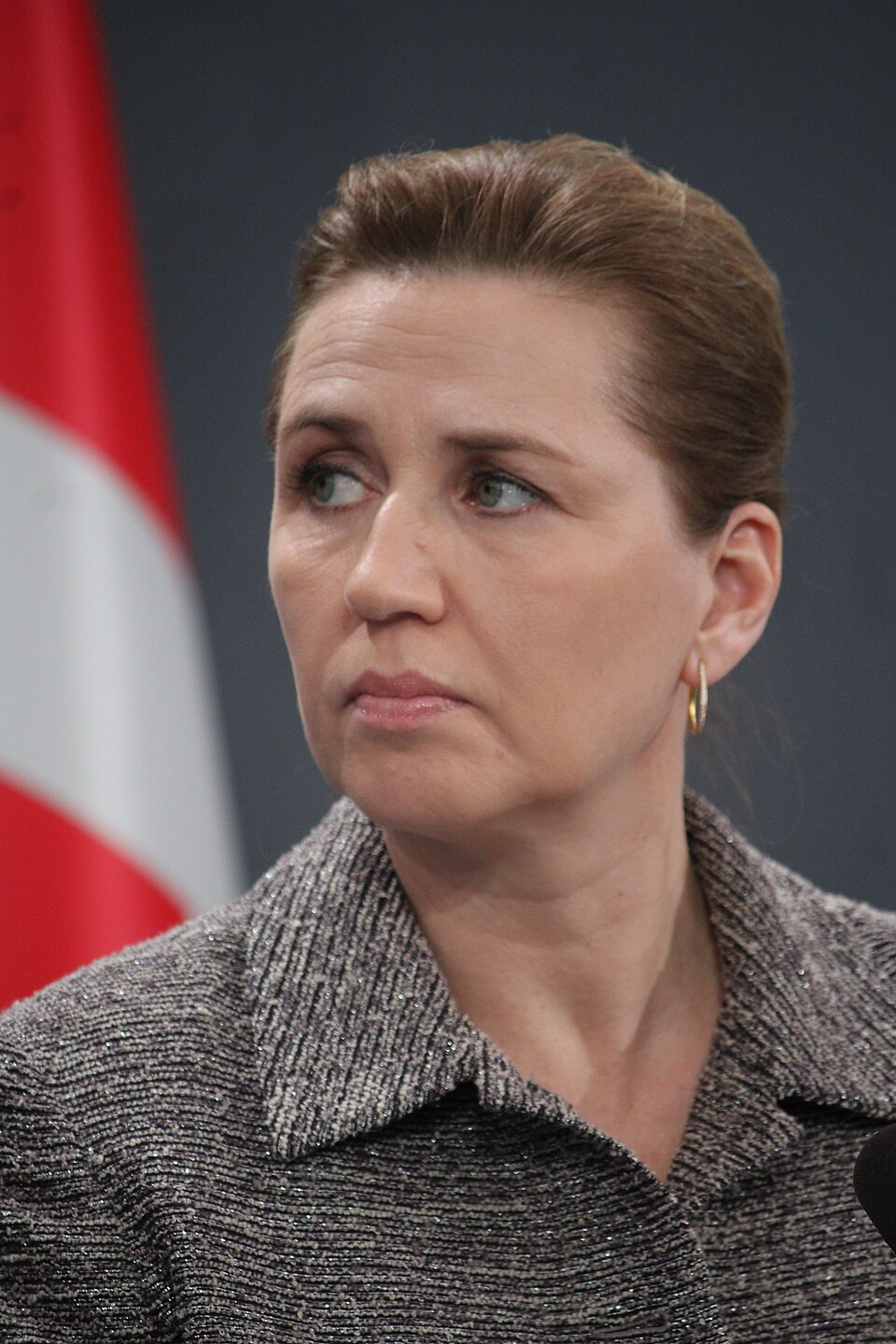
By Christian Ursilva - https://www.flickr.com/photos/ursilva/55042888769/, CC BY-SA 4.0, https://commons.wikimedia.org/w/index.php?curid=182190394.
(BERLIN, GERMANY) - The dust has settled over Denmark after the quite chaotic and closely watched Danish Folketing election, and a new political landscape has formed for the Scandinavian country. The biggest headlines are, of course, the absolute collapse of the Socialdemokratiet to their lowest support in over a century, despite being the largest party, while more unapologetic left-wing parties emerge to challenge Socialdemokratiet for leadership of the left. This article will highlight the results, policy analysis and the implications of the elections, with an overarching lesson at the end.
Election Results and Superficial Analysis
The Danish General Election on 24 March 2026 represented a watershed moment in the trajectory of European social democracy. According to the official Danish Parliament website, the Socialdemokratiet (the Social Democrats), led by incumbent Prime Minister Mette Frederiksen, recorded 21.9% of the vote and obtained 38 seats (down from 50), marking the lowest level of electoral support for the Social Democrats since 1903, more than a century ago. This decline follows an unfavourable, centre governing coalition with quasi-right-wing policies for the past four years, and a local election defeat in November 2025. It is now, depending on your political affiliation, correct to call the Social Democrats “left-conservative”.
Meanwhile, there was a surge amongst the democratic socialists - known as the Socialistisk Folkeparti (Green Left), which shot up to 20 seats, from 15. Formed out of an opposition to Soviet intervention during the Hungarian Revolution in 1956, the party describes itself as a democratic-socialist party which seeks to foster globalisation based on the grounds of solidarity. In the aforementioned local elections of November 2025, SF gained 80 seats as they broke 11% of the vote. They and their eco-socialist allies in the Enhedslisten – De Rød-Grønne (the Red-Greens) had enough support to take the Copenhagen mayoralty off the Social Democrats, who were running on a moderate alliance with the Radikale Venstre (Social Liberals) and Moderaterne (Moderates) for the first time ever. Overall, in the general election, the far left parties collectively won a total of 31 seats, up by 7.
Policy Issues
There were several policy issues that dominated the headlines in the Scandinavian country. However, this article will show that there are two major points of contention: Immigration and the Continuity of the Welfare State.
Immigration Policy Shift
The shift in the Social Democrats’ policy direction is obviously revealed in its approach to immigration, which turned out to be very restrictive. In 2019, the Social Democrats adopted a more restrictive approach, which they called a “paradigm shift” in their approach to migration. They have become more restrictive on immigration, which focuses mainly on reducing asylum seekers, imposing stricter entry rules and toughening integration policies. Traditionally, the Social Democrats were more humanitarian, but right now they are leaning towards a more conservative stance. This major shift is evident in several policies that have changed in recent years. By way of illustration, according to InfoMigrants, there is no monetary support provided for failed asylum seekers after their applications are rejected, and instead, they only receive basic necessities like food. Additionally, stringent measures have been introduced, such as allowing for the detention of certain asylum seekers in carceral detention facilities, especially in cases where deportation is considered. As reported by The Global Detention Project, the Committee for the Prevention of Torture (CPT) has repeatedly criticised Denmark’s prison-like detention facilities due to inhumane living conditions observed in some of the facilities, especially the Ellebæk Centre for Prisoners. These facilities have been described as having features like barred windows and gated partitions. On top of that, detainees also face harsh limitations, including restricted access to their mobile phones and being held in solitary confinement for weeks as punishment. This shift towards rigorous enforcement also demonstrated recent deportation trends. The rate of deportation increased from 19% in 2023 to 27% by 2025, which indicates a stronger focus on sending back foreign nationals. Simultaneously, asylum approvals dropped significantly to a record of 839 in 2025, which suggests that access to legal protection given to asylum seekers has increasingly become limited. Thus, this highlights the increasingly punitive nature of Denmark’s approach to immigration. This alienated a lot of the support the Social Democrats got since the turn of the century.
Welfare State Continuity
Although the Social Democrats have maintained their commitment to a strong welfare state, access to these benefits has become increasingly conditional and, to some extent, welfare chauvinistic, especially to immigrants and asylum seekers. Denmark has strict integration and welfare requirements where those who do not meet these conditions may receive reduced support. For instance, as stated by the Danish Immigration Service, asylum seekers are required to participate in mandatory activities like language training and maintenance work, and failure to do so will result in reduced or withdrawn allowances. Only small daily allowances are provided for essential needs such as food and hygiene, which shows that basic financial support is very limited. These measures indicate that social support is increasingly linked to compliance with state requirements, which reinforces a system where access to receiving support is more restricted to non-citizens.
Political Analysis
After losing power in 2015 due to concerns over immigration, the Social Democrats believed that adhering to strict immigration rules was essential to win back voters and secure a parliamentary majority. By adopting the ‘zero asylum seeker’ policy, the Social Democrats reduced competition from the far-right Dansk Folkeparti (Danish Peoples Party), which caused the latter’s electoral influence to disappear. Their idea of adopting stricter immigration policies showed that they aimed to win back working class voters who had shifted to anti-immigration parties, and it looked like it worked. In the short run, this strategy allowed the Social Democrats to stay in power and retain political influence. However, over time, the party experienced a decline in electoral support, where its parliamentary representation fell from 50 to 38 seats, which marks a great loss despite its strategic realignment. This decline reflects a shift in voter behaviour where some support appears to have moved towards other anti-establishment left-wing parties such as the Green-Left or the Red-Greens. Their dissatisfaction with the party’s centrist coalition was evident in 2022, the Social Democrats decided to form a rare grand coalition government with the Conservative liberal Venstre to navigate multiple crises and global uncertainty, especially in a post-Russo-Ukrainian War environment. At the same time, its zero-tolerance policy on immigration may have pushed more progressive voters towards parties with clearer left-wing positions.
Implications of the elections
The election shows that while changing policies can help maintain power for a short time, it can also cause long-term implications. The Social Democrats risk losing their core voter base and becoming vague as mainstream parties, including the Social Democrats, adopt a structural adjustment on economic austerity or security to compete with the far right; the traditional ideological boundaries between parties become blurred. The election also reflects a broader shift in Danish politics, where harsh immigration policies have become increasingly normalised, which increases political polarisation between left and right. Although policy adjustment can offer short-term electoral gains or coalition opportunities, it often brings about a death by a thousand cuts scenario where political parties slowly lose their identity, just like a certain social democratic party in the United Kingdom.
The Danish case study demonstrates that in trying to please everyone, one ultimately pleases no one. While the Social Democrats’ shift towards stricter immigration policies was just to regain and maintain power in the short term, ultimately, it came at the cost of electoral support and political lucidity. What Government forms out of this remains to be seen, but the lesson is to never tack to the right, lest your position as the main left-wing party in any democracy start to crumble as support shifts away to more ideological and unapologetic parties.
Earlier today, on the 2nd of June 2026, a Danish Government was formed between the Social Democrats, the Green-Left, the Moderates and the Social Liberals in a minority coalition Government with extra-government support from the Red-Greens. Denmark will have a popular front.


